Friday, April 25, 2008

Breaking Consumer News! - Italian Eateries Suddenly Losing All Business in Israel

Is Italian food a dying trend? Disturbing recent news from Israel seems to imply this may be the case. Keep up with M(R)V and we'll follow this story closely as it unfolds. -ed.


(Reposted with permission from the Jerusalem Post)

Tel Aviv, Israel-

Luigi Toriella is baffled.

The Italian immigrant moved to Israel one year ago to open locations of his popular chain of family friendly eateries, Luigi's. Until very recently, Luigi's was wildly successful in its two Israeli locations, Tel Aviv and Jerusalem. All that changed last weekend.

"It was completely out the blue," Toriella explains. "I don't want to sound hyperbolic here, but the change was literally overnight. As recently as Saturday night, we were packed. And then, Sunday...nothing. And that's pretty much been the case ever since."


Employees at of Luigi's in Tel Aviv wait impatiently for any signs of prospective customers.

In fact, Toriella claims that the Saturday before the sudden downturn was the busiest night in his restaurant's one year history. Shockingly, receipts from the Jerusalem location have shown exactly the same trend.

"Last Saturday, people were coming in in droves, ordering up plate after plate of pasta dishes. We could barely keep up. We were totally understaffed and under prepared. I thought I would have to hire new servers if this was going to become a regular thing."

In fact, the opposite seems to be the case now. Toriella says that after this week he can barely afford to keep the restaurant open, much less pay his staff.

"The Luigi's phenomenon is baffling to us all," says Rick Lasseter, a former economist and now a business analyst for the UK-based Independent. "We do see sudden drop-offs in popularity throughout the market, and sometimes those drop-offs can be quite dramatic. But those sorts of sudden, steep declines only tend to occur with bona fide fads, like snap bracelets and pogs. I can't explain this at all. Not to sound superstitious or to appear to be jumping to conclusions, but It's almost as though it's an act of God."


Above: A graph showing Luigi's steady growth and sudden, immediate decline in business

Toriella's family moved to Paris in 1974 and founded the first Luigi's there, hoping to tap into a growing European trend of shared cultural cuisine. The success of the restaurant was immediate, and Toriella (who shares a first name with his father and his family business), now 54, inherited the business in his mid-20s. Naturally business savvy, Toriella began opening new locations of Luigi's; first throughout France, and then in many other European countries.

The two Israeli locations were notable because, for the first time, the Toriella family business had spread outside of Europe. Toriella knew he was taking a big risk in moving to the Middle East and attempting to expand his business there, but the positive response was immediate. The first Luigi's opened just over one year ago (April 11, 2007) and Toriella describes the reaction as such:

"It was, honestly, as though these people hadn't ever had real Italian food before. They like they were literally desperate to eat our authentic, steaming, heaping bowlfuls of pasta, cooked al dente, to perfection, and smothered in perfectly blended pesto sauce, creamy and zesty alfredo sauce, or my family's secret recipe: Toriella's tomato sauce with a delicate blend of oregano and garlic. And all of it topped with tangy, freshly grated Parmesan cheese and ground pepper with sides of fresh-baked Italian bread and sweet extra-virgin olive oil! It was unbelievable. It was a dream come true. And I knew then I had made the right decision.

"At least," he went on to say, "I sure thought I'd made the right decision."

The sudden and unexpected disappearance of customers from Luigi's is perhaps more baffling given that, in its year of operation, the restaurant had not one health code violation, not one customer complaint, and a comment box full of enthusiastic scribblings of "Mazel Tov!" and "Great, my brother!"

Regardless, the fact remains: Luigi's hasn't had a single customer in a week, and Toriella is at an absolute loss. He fears he may have to close down his Israel-based locations, and just when he was planning on expanding into other Middle Eastern countries.

When asked how long Toriella was willing (or financially able) to hold out for a resurgence of business, sounding quite pessimistic, he responded, "I don't know...two days? Three, at the absolute maximum".

"Even then," he added, "we'd have to have a crazy few days to make up for this slump. And that just doesn't seem likely to me at all..."

Wednesday, April 23, 2008

Counter Points: Colbert Says "Earth is Awesome"

Peabody Award-winning conservative political pundit and patriot Stephen Colbert has made a heroic career of shining a divine mag light on the truth through the murky, Alaskan oil-spilled waters of spin. So it's not a surprise that his views about Space, specifically in regards to our solar system, do not necessarily fall in with "popular opinion". Colbert calls 'em like he sees 'em, and we here at M(R)V respect and value dissenting opinions. Have a look at what Colbert has to say and decide for yourself.:

STEPHEN COLBERT : "EARTH IS AWESOME"

Monday, April 21, 2008

The Future

Overview: Great Scott! The future! Despite continually failing to live up to its promises of time travel, flying cars, and jet packs, trends clearly show the future's steady and strong growth. Studies indicate that 100% of Americans (and roughly as high a percentage of the global population) remain steadfastly dedicated to embracing and moving toward the future. Why the unwavering devotion to the future, and what does the future's future hold?

The future was first discovered by author and potentially crazy fantasist Jules Verne towards the end of the 19th Century, shortly after the discovery of science.

Prior to Verne's time, most individuals were exclusively concerned with what was known as "the here and now". Largely, this was due to the overwhelming pre-science stresses of "getting into 'heaven'" and not dying of the plague. The age of science did two things: it let people live past the age of 30 for the first time, and it also allowed them to spend more time complaining that they couldn't do certain things, like fly and communicate with God telepathically. Slowly, more and more members of the human race began noticing that every passing day was a day later than the previous day. Many philosophers and mathematicians noted that each coming year was represented as numerically greater by one than the previous year (for instance, 1783 eventually yielded 1784, which led to 1785, etc.)


Above: Rock group ESP demonstrates a completely fundamental misunderstanding of the nature of both the future and music.


There could be no doubt: mankind was slowly but quite surely heading toward the future!


Above: A scientific timeline showing the continued trend toward the future. Important events are listed at bottom "chronologically". Notice that, even before the future was discovered, time would move forward at a steady and consistent rate as historical events played out (CLICK TO ENLARGE!).


When Verne came on to the scene, however, the future really began taking shape, both as a concept and a product. Verne could have been accused of "overselling" the future as, indeed, many of his contemporaries never came to know the marvels he promised, such as submarines, space shuttles, and being able to travel around the world in 80 or fewer days. Of course, today, as we appear to get closer to the future, many of Verne's lofty promises have come to pass! (It is, for instance, no longer impressive to boast that one has circled the globe in 80 days).

If there is one criticism that could justly be applied to Verne, it is certainly that the "future" he so boldly promised has actually turned out to be the present, though one can forgive Verne for not having the foresight to have predicted that the future would still be quite a ways off, even as late as the early 21st Century.


Above: Test your consumer expectations - If you saw a school building with this sign, what assumptions would you make about the nature of the school housed within? Most of those polled assumed the school would be taught by hologram people (89%) and that students would download all knowledge through a wisdom chip implanted into the brain (78%). In fact, this school is actually incredibly similar to "schools of the past", including a high concentration of regular human teachers and apathetic and likely stoned students.

So when the promised future does take place, what can we expect?

Well, believe or not, the market has found there is a fortune to be made out of forecasting what the future will look like when it finally does arrive. Movies like Blade Runner and Minority Report suggest that it will be a lot like Times Square, only bigger and even more unbearable. Both of these futures, it should be noted, were hypothesized by author Philip K. Dick, who was insane.

Movies like Back to Future II seem to suggest a less bleak outlook, envisioning a future filled with hoverboards and highly-advance high-top sneakers.


Above: Ooooooooooooooooooo...future-y!

Still, the market has long agreed that the future will be notable for a number of key features, all of which were established by the popular television series, The Jetsons.


Above: God, when? WHEN?? Hurry up, the future...

This means that we have a handy litmus test for when we have finally reached the future. The key attributes will be as follows:

-All cars will be able to fly, which is largely considered the most significant identifying characteristic of the future.

-All buildings will be built in the sky on poles, kinda like Bespin in Star Wars.

-All citizens will have safe, affordable jet packs.

-All telecommunication will implement monitors. (fig. 53R)


Fig. 53R

-All household items will include antennae.

-Dogs will be able to speak English, though in the barely coherent, mumbly sort of way that you'd imagine a dog would sound like if dogs could talk.

-All household chores will be done by comically outdated notions of artificial intelligence modeled after comically outdated stereotypes of servants.

-All surnames will have evolved to reflect future technology and occupations. Just as the formerly common occupation of blacksmithing during the Middle Ages yielded the common last name "Smith", so too will cog production, jet design, and Space travel, all important occupations of the future, yield last names like Cogswell, Jetson, and Spacely.*


*The actor Kevin Spacey may be a harbinger of the coming futuretimes.


As with all popular trends and products, even the near-universal endorsement of the future has been met with some resistance. A small but growing minority has been vocal about its aversion to the future, and appear quite vigorously intent on promoting living in the past. To some, this can mean promoting a shift in market focus to the living conditions, technological advances, and levels of scientific understanding of the Middle Ages, like Pat Robertson, John Ashcroft, and Tom DeLay.


Above: "Democracy? Basic human rights? Habeas corpus?? Religious FREEDOM??? Yeah, okay Mr. 'Sci-Fi Future Crazy-Town'" -Pat Robertson

For others, it means ignoring the 21st Century altogether, such as in the case of Yankees Fans.

And then there are those who are warning that the entire trend may be a hoax; that, in fact, there may never be a future at all!


Above: Academy Award winner, Nobel laureate, and former President-Elect Al Gore, who's all like "totally not gonna happen" about the future. But I want there to be a future, Al Gore...

Still, it's hard to blame such people for their negative feelings about the future, especially when, in the past, they looked like this:


Above: Sorry, young man, are you lost? Don't you think you're a little too pretty to be a Senator?...

Even some Hollywood filmmakers have bought into the "no future" hypothesis.


Above: "Ahm looking fah Say-ah Cah-nah...."


But while former President Gore may be right about a lot of things (the internet turned out to be a great idea), it's hard to take his data seriously, especially when all market analysis has shown consistent and constant trending towards the future with no signs of a downturn.

Still, one legitimate concern about the future does remain: that of its seemingly long-delayed arrival. For a solid century, conventional wisdom held that the future would arrive sometime on or around the year 2000, as demonstrated in Space: 1999 and 2001: A Space Odyssey. Turns out this prediction was way, way off the mark.


Above: You LIED to me, Martin Landau...


In fact, perhaps the only significant technological breakthrough of this short period was The Legend of Zelda: The Ocarina of Time (for the non-holographic, non-immersive virtual reality videogame system, Nintendo 64), which, while admirably a Players Choice Million Seller and the 1999 Videogame of the Year as awarded by the Academy of Interactive Arts and Sciences, was still a far cry from the standard of flying cars, hologram people, robots, and houses on poles.


Above: But, dude, it was still completely awesome.

So the fact remains: we are still anxiously awaiting the future, and there are no (or few) apparent signs of its immediate arrival.

It's safe to say, though, that barring an overwhelming reawakening of nostalgia such as that which briefly took hold of the nation during the run of VH1's "I Love the (INSERT DECADE HERE)" series, its popularity will not subside. Nor will its considerable (and apparently impossible to reverse) influence of the passage of time.


Above: "Coming up NEXT on VH1, Andrew McCarthy hosts 'Remember How Awesome Rubik's Cubes Were?': A retrospective of the life of the Rubik's cube, set to the music of A-Ha and featuring a guest commentary by Q-Bert!!!"


RATING: ***1/2 (out of 4)

BOTTOM LINE: Ask me again sometime.


Thursday, April 17, 2008

Deeper Insights: Women - Should they Work?

Our thorough and insightful review of Women sparked a great deal of reader feedback, especially among Women. We always strive to keep our readers up-to-date when it comes to product analyses, which is why we present you with this important user's manual, outling the proper approach to Women in the extremely unlikely event you should encounter one in the workplace.


CLICK IMAGE TO ENLARGE:


Our thanks to reader and Woman Monika Sarac for alerting us to this important consumer report.

Deeper Insights: Space - Just How Big IS It?

The editorial team here at M(R)V has been working overtime to respond to reader complaints that yesterday's analysis of Space was too complicated and inaccesible to the lay reader (we heard "wordy" and "sciencey" cited as chief complaints).

We therefore present you with this computer-rendered map of Space in hopes of clearing up some of the more complicated details.

CLICK IMAGE TO ENLARGE:


We always value reader input, and we thank you for your helpful suggestions.

Wednesday, April 16, 2008

Space

Overview: Space is a lot of things: the final frontier, a place where no one can hear you scream, big. We've come a long way in our cultural appreciation of Space, from the time of the ancient Greeks, who believed Space was a big dome over the world with little pinholes in it whereby the light of eternal paradise would shine through in perfect celestial splendor*, to the early 20th Century, when it presented the imagination with infinite possibilities of human colonies on Mars, laser fights, and flying saucers, to today, when scientific discoveries have revealed that Space is sort of cold and boring and all the fun has been removed. Still, people are looking to stars in growing numbers. Why?

*I think this might actually be true...Not the part about the
dome with the pinholes, but the part where the ancient
Greeks believed it.

Because in a the foreseeable future, Earth will be uninhabitable*, and we need to find a way to move to a new planet, quickly.


*Stephen Hawking said so...and he's a scientist.

But why else?


Above: Space (as viewed from Space)


For a variety of reasons, Space has become so popular of late that, for several years now, our modern era has been known as the Space Age. Why would something that is billions of years old suddenly become so important to the modern age? One must suppose that it is rooted in people's innate desire to go places, and when the first complete map of the World was unveiled (in 1961), it was not long before the realization set in among Earth's inhabitants that we'd all pretty much been everywhere. It was time for a new planet!

Unfortunately, new planets are really far away, so we had to settle for The Moon, which is not at all dissimilar to sleeping in a tent in the summertime in your parents' back yard and calling it "camping".


Above: The "Historic Williamsburg" to Space's "Magic Kingdom"

Quickly, Space became the talk of the town. The question remained, though: how do you get there, how do you breathe when you do, and does going to the Moon even count? The answer to these questions was quite simple: Whatever, as long as we do it before the Russians.

And we (by which I mean two Americans and some other guy who went to the Moon but did't get out of the lunar landing module) did!

Those two American's names were (or "are", if they're still alive) Buzz Aldrin and Neil Armstrong: The first people in Space!


Above: (from right) Buzz Aldrin, Neil Armstrong, I'm Guessing John Glenn?, and James Garner

Thanks to these brave men, the Moon had become yet another thing conquered by mankind/America (joining the esteemed company of Iraq, self-esteem/weight issues, fear of heights, Indigenous Peoples, Canada, and Dinosaurs) and this conquest was commemorated when Alan Shepard stuck an American Flag into the Moon's surface during the Apollo 14 mission.


Above: Astronaut Alan Shepard stands on a Hollywood soundstage during the filmed recreation of his own moonwalk, which, like all other lunar landings, was in no way a hoax; in point of fact, Edgar Mitchell forgot to bring the camera, and NASA couldn't afford to send John Glenn after them to drop it off.


After the success and spectacle of the Apollo lunar missions, NASA made every attempt to downplay and debunk the claims of Glenn, Mitchell, Shepard, Aldrin, and Armstrong, whose public complaints about Space ranged from "boring", "empty", "cold", "quiet/how come there's no sound?" and "not as cool as it looks/appears to be on 'Star Trek' or 'Buck Rogers'" to less damning faint praise, like "I guess sort of worth day after day after day of being cramped in a tight space in zero gravity with two other dudes, because the view of the Earth from the Moon is pretty-ish...". Worst was the notorious comment of Apollo 13's Jim Lovell, who said that the entire experience "really kinda pretty much blew...".

Shortly thereafter, NASA teamed up with a host of marketing strategists and Hollywood executives in an effort to overhaul Space's fading public appeal. The result was Science Fiction.

Inspired largely by pre-existing properties, such as Star Trek, Buck Rogers, Planet of the Apes, and The Bible, the new realm called Science Fiction made sure to eliminate the tedious prosyletizing and obvious metaphors of which these previous ventures were commonly guilty and focus, instead, primarily on Space; specifically on fantastical and often misinformed (and thus more interesting, or "cooler") concepts of Space-travel and physics.


Above: In an exciting episode of Star Trek, Spock desperately explains to Kirk that a unilateral assault on the Farsian Nebula would represent a violation of the Prime Directive and possibly provoke a retaliation by the Romulans, who are engaged in a diplomatic-relations battle with members of Starfleet over the expansion of autonomy to thwioihn oepwjnfoienhhnougbgbijjjjjjjkkkkllgrkSBJo;ibwgejknbiklwkegewG...Oops, sorry, nodded off for a second there. Anyway, meanwhile, absolutely nothing cool happens.


Science Fiction used "dramatic license" to rekindle a dwindling interest in Space. All the boring realities of Space that had become apparent thanks to NASA's exploration left a bad taste in the mouths of consumers, and so a strategic re-marketing of Space was necessary. The key question was this: "How can we make Space interesting again, when there's no sound, gravity, air, it takes forever to get anywhere, and the physics are unfamiliar and restrictive?"

The answer? Simply set stories about Space in the future, when these issues are somehow resolved ("Alien", "Aliens", "Alien 3", "Alien: Resurrection")


Above: Yeeeeeaah! Space is AWESOME!!!

Or, as an alternative solution, set stories in Space but in a different Space where these rules don't exist ("Star Wars", "Dune")


Above: Whoooooooo! SPACE!!!!

Star Wars, it should be noted, also worked hard to makeover another disappointing revelation of the so-called "Space Age", the laser, which, while it seemed cool at first, doesn't actually make a very effective hand-held weapon, doesn't make any awesome noises, and actually isn't really that cool.


Above: Bzzzzzzsshoooooowaaaahh...Crrrsshcck...crsshhukk! YEAH! Lasers!! Darth Maul! Whooooo!

As Science Fiction evolved, so too did the ideas of its creators, some of whom, like Joss Whedon, actually made concessions to Space's outrageous and lofty demands, like admitting, in his Science Fiction opus Firefly, that it probably does not and likely never will support sound, but will always support Cowboys. Or Battlestar Galactica, which admits that Space is cold and kind of sucky. In both cases, lasers are absent. Neither, however, bother to explain how propulsion works nor how the crew can just walk around like they're in a building on Earth. Presumably, somebody in "history" (what we'd call "the future") built a gravity maker. The gravity maker is never referenced.


Above: The crew of Serenity from the short-lived Science Fiction series Firefly, which FOX cancelled because they don't know how to advertise a show that is smarter than any one of its executive creative and/or marketing directors. Third from right, Nathan Fillion, who is awesome and should be on every show. Far right, Summer Glau, who is hot.


Above: A pretty thinly-veiled excuse to insert a picture of Katee Sackhoff (who plays Kara "Starbuck" Thrace in Battlestar Galactica) into my blog.

Fortunately, the rise of Science Fiction and the woeful underfunding of the Space program meant that the dissapointing revelations of the 1960s and early 70s soon faded from the public's awareness, and a new generation of would-be Space explorers and enthusiasts could dream again.


Above: "This is Houston. We are GO for launch in T-minus 27 years..."

Also, the wholesale destruction of Earth's ecosystem actually has made exploration of Space and advancements in mankind's ability to explore it urgently necessary.

So we can think of our current relationship with Space as such: We have to be at the wedding in ten minutes. But we can't remember what we did with the tuxedo, and our shoelaces are broken. And the wedding is 800 miles away. And we are infants. Better think of something fast!

It is thus difficult to accurately gauge how we should think about Space in general and to predict where our cultural infatuation with Space will ultimately lead us.

My advice? Jump on the Space bandwagon! Why? First of all, it is unlikely interest in Space will fade any time soon. It is important to remember that, like Pascal's Wager, which suggests it is safer to believe in God than to not believe in God (as the cost-benefit analysis clearly suggests), it is better to look to Space and hope we can someday find a way of overcoming the considerable obstacles it presents us with than to not look to Space and assume that we are basically all screwed.

There is also growing hope that some "people" from Space will show up and show us how to do everything*. In fact, some scientists and FBI agents believe this has secretly already happened.

*Actually, that's pretty much the only hope...


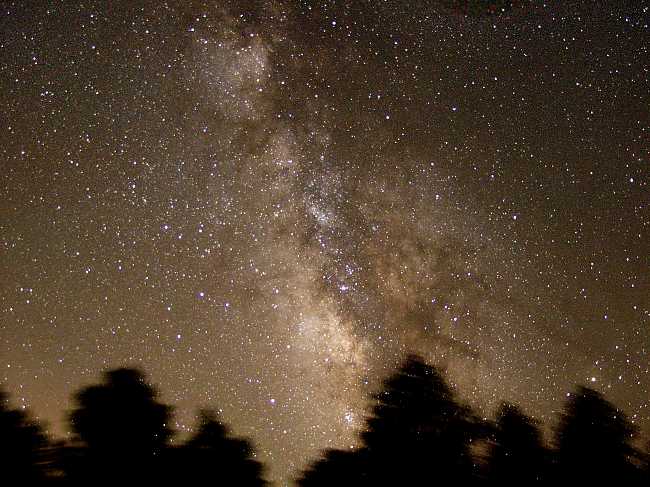
Plus, it's kinda hard to argue with something that looks like this from Earth...


SPACE:

Pros- pretty, kinda cool, auroras, meteor showers, stars, symbolically captivating vastness convenient for metaphors/personal reflection

Cons- too big, no air, hard to get around, no sound, no nearby inhabitable planets

RATING: *** (out of 4)

BOTTOM LINE: Help us, Obi-Wan Kenobi (or anybody with technology advanced enough to get us off this planet before we run out of room/resources/air). You're our only hope...


Monday, April 14, 2008

Breaking Consumer News! New York Post follows M(R)V's lead!


The dignified and reputable news journal of record, the New York Post, considered by many some gerbils? few all to be the gold standard of journalism, contains a feature today written by and featuring the work of Lilit Marcus, specifically regarding her website, Save the Assistants!

Above: Lilit Marcus

The Post, which is one of the flagship enterprises of Newscorp founder and dictator for life Rupert Murdoch, has clearly been paying attention to a certain well-known and highly-regarded blog.


Above: Rupert Murdoch


Astute M(R)V readers will recall that Ms. Marcus was largely the focus of this post, dated April 1, 2008...a full 13 days before the Post managed to catch on to Ms. Marcus' trend-setting ways.
You knew it all along, of course, but this further proves that M(R)V is leading the way! We thank you all for helping to make this possible, and accept your implicit congratulations you are probably bestowing upon us as you read this.

Lastly, we would like to congratulate Ms. Marcus, Save the Assistants, and this blog for having been eligible for a Webby Award. It is a true honor to have been eliglible for consideration for this prestigious recognition, and we thank the internet for providing us with this opportunity.


Friday, April 11, 2008

John

Overview: John hasn't posted a review in over a week. What's the deal with that guy?

[Written by special guest reviewer Ann Coulter]

Leave it to the liberal media to give Brooks a free pass. I'm sure they're all too busy highlighting their favorite passages from "The Communist Manifesto" and drooling over the latest anti-American propaganda piece by Paul Krugman - propped up by the geniuses at the ultra-left (un)American journal of record, the New York Times - detailing how, exactly, the election of socialist candidate Barack Hussein Osama to the highest office in the land will not inevitably lead to the collapse of the Republic.


Word from the hate-mongering liberal spin machine is that Brooks has been "busy": liberal shorthand for "devoting more time corrupting the American way of life", usually through coddling terrorists, celebrating French holidays, strongarming Congress to enact a National Baby-killing Day (for which all abortion Doctors would be given an honorary day off, one they would likely not take, as it might interfere with their precious ritual of murdering babies), or whining about how they can't get married to the "person" they "love", because we "bigotted" conservatives won't recognize the holy union of a man and his ferret.


But you don't hear about any of that on MSNBC. Imagine, if you will, the way the LM would get their panties in a bunch if President Bush ever took a "week off". Imagine the cries of outrage if Bill O'Reilly ever took a "week off". How would the LM spin that?

"Oh, O'Reilly isn't a real journalist! He's not commited to his craft! He doesn't care about getting true-red Americans the truth!"


What they don't tell you is, unlike Brooks, who right now is probably burning an effigy of Jesus in the fireplace of the executive lounge at the W Hotel and sprinkling embryonic stems cells on his organic avocado and butternut squash salad as he enjoys a relaxing lunch with Richard Dawkins and John Edwards as they consider more effective means of destroying freedom and demonizing Jefferson, when Bill O'Reilly takes a week off, he lets other responsible truth-tellers who love their country and their savior-and/or-Israel take over for him: people like Sean Hannity and myself.


And what does Brooks, whose anarchistic and atheistic liberal bias on issues like cookies and women's rights have plagued this site and helped further sodomize the American Way of Life, do? More than a week after his last post, he invites me to share my views on him.

Typical anti-American liberal tactic.


I suppose in between celebrating 9/11 and bribing liberal activist judges to rule in the bench, he realized his site actually needed some content, so he brings in a best-selling author like myself to raise his profile and prove that he's "open-minded" to dissent.


Funny how liberals love to talk about how important it is to maintain dissent in America, isn't it? It's quite convenient for them when they can rail against the courage of our President for overthrowing a dictator and tell our troops in Iraq they should cut and run and they're all weak failures and murderers.


But heaven forbid somebody disagree with them, with dissenting opinions such as "Whether they are defending the Soviet Union or bleating for Saddam Hussein, liberals are always against America. They are either traitors or idiots, and on the matter of America's self-preservation, the difference is irrelevant", or "We should invade their countries, kill their leaders and convert them to Christianity", or "Liberals become indignant when you question their patriotism, but simultaneously work overtime to give terrorists a cushion for the next attack and laugh at dumb Americans who love their country and hate the enemy", or "My only regret with Timothy McVeigh is he did not go to the New York Times Building", or "Earth is yours. Take it. Rape it. It's yours", or "If I'm going to say anything about John Edwards in the future, I'll just wish he had been killed in a terrorist assassination plot", or "We need somebody to put rat poisoning in Justice Stevens' creme brulee. That's just a joke, for you in the media."**

**(Editor's note: these are all actual Ann Coulter quotes)


And did anybody notice that when I suggested murdering a member of the United States Supreme Court that I specifically noted that I was joking?


Well, some people did. But not others. I'll give you a hint as to WHO: they spend a lot of time arguing for a married gay couple's right to abort their test-tube babies, and they run the media.

The same people, I might add, who didn't seem to mind an entire week of this site not being updated and would take Brooks at his gay-loving, abortion-party-throwing, Jesus-re-crucifying word that he swears he will have two or perhaps three posts next week, starting no later than this Saturday.


I seem to recall a certain President swearing to uphold the Constitution not that many years ago. I do not, however, recall anything in the Constitution that mandates oral sex with an overweight intern.


That should tell you how much a liberal's "word" is worth.


In closing, I forgot to say "fag".


-Ann


Ann Coulter (above) is the best-selling author of "Slander!: Liberal Lies About the American Right", "Treason!: Liberal Treachery from the Cold War to the War on Terrorism", "Godless!: The Church of Liberalism", "Murder!: The Victims of Liberal Homicidal Mania, From Jesus to Freedom", and the upcoming "Ransom!: Give Me $20 or I'll Stab Your Puppy"

Tuesday, April 1, 2008

Interviews

(Author's Note: Special thanks to Lilit Marcus, both for the suggested topic and for providing the referenced example.)

Overview: "Interviews" - a fancy word for when a regular person (or, on occasion, a famous person who is famous for interviewing other famous people and nothing else, like Oprah) asks questions to a famous person, writes down both the questions and responses, and then edits the famous person's responses so that they do not come across as intellectually inferior and unable to form coherent thoughts and phrases - are becoming more and more popular in the world of journalism, and readers especially enjoy them, especially the "Q and A" (journalism lingo for "question and answer") form, largely because they are shorter and have fewer long words and no boring expository (or "describey") information.

Q: Why should you care?


A:

The "interview" form actually dates back to Ancient Roman times, as indicated by the Latin roots of word itself : from the Latin "inter", which means "between two or more" (and just assume it's talking about two or more people), and "view", which means "view". So "interview" actually means "the view between two or more people", even though, technically, only one person's views are being represented. But Latin was pretty restrictive that way.


Above: "The surge is working"

In fact, the interview was pioneered/invented by Julius Caesar, who came before the Romans and said, "Friends, Romans, Countrymen...lend me your ears!" (but in Latin), and then presumably fielded questions from the crowd (now known as a "press corps") who would ask him how he felt about how great he was, and how that campaign in Carthage was going, and if he felt the media was ever too harsh on him, etc. These days, this kind of interview is also known as a "press conference" or a "junket", but we're going to stick to the sorts of interviews that people actually care about.

Interviews people actually care about are always ones with celebrities.


Above: Ahhhhh...YAY!!!!! Look at how famous we are (clapclapclap)!

In almost all of these cases, that famous person has something to do with American Idol.

American Idol is a unique source of famous people, largely because its three "hosts" are/were a) the not-famous back-up musician for creatively bankrupt bands like Journey, b) long-since expired flash-in-the-pan pop singers with slurred speech and brain cells that appear to actually die on camera/married to Emilio Estevez, c) some British guy who's sort of famous in Britain for making several British sort-of-musicians kind-of famous and who everybody boos at, and Ryan Seacrest.


Above: (from left) Ryan Seacrest, "A", "B", and "C".

The only other people to appear on the show are an overwhelming number of singers who don't win and won who, every season, eventually does win. But even in the case of those who do win, some of them turn out to be Taylor Hicks.


Above: Really?

Indeed, American Idol's celebrity-making abilities seem as unlikely on paper as they are absolute in reality. Still, tradition holds that even showing up on camera in the audience of American Idol or having a gruesomely bad audition makes someone interview-worthy.


Above: William Hung discusses the subprime mortgage crisis on CBS's "The Early Show"


And thus if you actually end up singing on stage in American Idol you are a bona-fide celebrity and deemed even more interview-worthy than other celebrities/famous people. The formula essentially works as such:


The longer you actually remain on American Idol, the longer you remain interview-worthy. So let's say you make it to the final 6 contestants of any given season of Idol. This means, if you do nothing for the next six years, you will still be worthy of being interviewed for the following six years. This lease can be renewed by doing anything anybody cares about, and none of the above applies at all to Taylor Hicks.

As a prime and quite current example of an interview, I have decided to include some of the text of one such piece by Lilit Marcus in an interview with American Idol season 6 non-winner Chris Sligh. This interview originally appeared on the website Beliefnet.com, with which I have no affiliation whatsoever and so it's not even worth Googling to find out I do, because I don't.


The full interview is available HERE. (**And, for another example of an interview conducted by Lilit with another grating person suffering from delusions of grandeur who also claims to have God on her side though apparently not the same God who can declare you the winner of American Idol, click HERE**)


Above: Lilit Marcus, with whom I have no professional affiliation, during her interview with American Idol failure, Chris Sligh.


As we go through each question and answer, I will comment on the effectiveness and content of the interview, which should help you understand what to look out for should you decide that either interviewing or interview reading would be right for you:


***************

Q: How do you define Christian music?

A: I don't know that I would define Christian music. I don't know that Christian is an adjective—it's more of a noun. So, I don't know that there is Christian music. I would say that I'm a believer. Christianity defines who I am, so, any music that comes out of me is going to be encapsulated into me singing about my beliefs and religious system.

Okay, bad start. Notice how, in this question, the famous person has come off not sounding intellectually competent, as he has demonstrated that he is unaware that nouns have definitions just as adjectives do. For instance, the noun "noun" has a definition, which is "a person, place, thing, or idea". Other nouns with definitions include cats, baseball, and women. Also, Sligh says he does not "know that there is Christian music", but pay careful attention to later segments of the interview, where Sligh speaks quite knowingly about Christian music (and is thus obviously aware of its existence). It would have been in Ms. Marcus' best interest to have edited Sligh's response down to the first sentence of Sligh's repsonse ("I don't know that I would define Christian music") and then moved on. Speaking of which...

****************

Q: On your blog, you've linked to the Barack Obama "Yes, We Can" video. Do you agree with him politically?

A: I'm not a politician. I don't really feel like it's my place to talk a lot about politics.

Okay, great! Perfect! Had Sligh stopped right here(or Ms. Marcus simply edited his comments down to these two statements), this would have been concise and true. Aside from the fact that this statement is contrary to everything American Democracy stands for, it is at least a short and fairly coherent response. It is made worse, however, by the fact this it is also contradicted by the extraordinary amount about politics Sligh goes on to talk about.


A (cont.): I like a lot of what Barack Obama stands for. I'm in the middle of reading his second book. I read his first book and really appreciate his view on a lot of things. It seems a lot more reasonable than so many politicians nowadays, both on the right and the left. It seems like even though he would define himself as a liberal Democrat...

To Chris Sligh's credit, in fact the only people who would not define Barack Obama as a liberal Democrat would be liberals, Democrats, and Barack Obama.

A (cont.): his views are actually more moderate than just about any Republican or Democrat that I know of.

(See Above)

A (cont.): He's a brilliant orator, which I think America needs at this point. I think that we need somebody that's going to be able to handle criticism and maybe wipe away some of the sins that our current president has inflicted on the world. When it comes to Bush, I think he is a great man. I think he's a man of God. [But] I think he, in his recent years, has not presented America in a light that I think America maybe should be presented in.

Sorry, you still awake? Okay. Then I assume you made it to this statement: "When it comes to Bush, I think he is a great man [emphasis added]. I think he's a man of God. [But] I think he, in his recent years, has not presented America in a light that I think America maybe should be presented in." And thus I hope you did no suffer an aneurysm.

**************

Q: Every year as there's a new season, there are dozens more "Idol" contestants trying to get record deals and trying to become famous. How do you make yourself different from them and stand out?

A: I think the difference between me and every other "Idol" that I know of—I've done a lot of research on this— is that I was the first to come in and have had a successful indie career before "Idol." I sold about 35,000 records completely independently.

I played 75 to 100 shows for the last four or five years straight. I traveled around for years as an artist and had actually built up a following, had developed my songwriting more than I think any other "Idol" has. I'd actually won national songwriting contests. I have always thought of myself more as a songwriter than I have as a singer.

Hey. It's John. I just thought I'd slide in here. Can you believe this guy is still talking? Pretty much, you can skip the rest of this, because he just goes on to talk about about how great he is and how much better he was than the person who actually won Idol, which, to be fair, was Jordin Sparks, but really he wasn't even as good as Blake or the kid who looked like Justin Timberlake with a pituitary disorder. It's just unbelievable how much this guy talks about how great he is. You can stop, if you want.

I think that that's one of the things that will set [my album] apart. It doesn't mean that I'm going to sell millions and millions of records. In fact, I don't know that my goal is to sell millions and millions of records, although that would be nice. My goal is just simply to be successful enough that I can make a second record and then to be successful enough to make a third record and to be able to tour most of the year.I received phone calls or e-mails from 11 labels the day that I got voted off. It's because I had cultivated relationships within the industry. The way that I viewed "American Idol" is this: It was not an end all, it was just a means to an end.

And that's the difference between me and almost every other "American Idol" competitor. I was using it for a PR tool so that I could get a record deal and put out great music and hopefully the music finds its way to the people. All "American Idol" does is put me in front of 35 million people. I never wanted to win it (sorry, I just had to highlight that. -John) I never was in it to win it. I wanted to do well enough that I could get a record deal and sell 200,000 records because with the deal that I'm in right now, 200,000 records is going to pay me more than if I'd sold two million with a major label deal.

Wow. And then, finally:

**************************

Q: Why did you ultimately decide to sign to this label [Brash Music]?

A: I actually didn't sign with a Christian label. I signed with a mainstream label that happens to do Christian music also.

OOPS! Remember how he didn't know that Christian music existed?

A (cont.): Our main distribution is through ADA, which is a Warner Brothers independent label distribution. I had three Christian-based labels that were fighting over me, but I just didn't feel like that that's where I wanted to be. I did want to be able to make music that would go to the church. I feel like the church is my home.

So Chris Sligh, who is famous enough to be interviewed and not even want to win American Idol, can't afford his own place and lives in a church.

A (cont.): I've been a worship leader my whole life. I grew up in the church, and I really felt like I wanted the church be my home base, but I wanted the option to do more things.

Mmmmm.

But I would not be a reputable journalist if I simply left this as the only example of an interview. It is my responsibility to provide an alternative, or "counterpoint". So, tapping into my vast network of contacts, with a little luck I was able to track down Ms. Marcus and conduct an interview with her. In this case, Ms. Marcus is the famous person and I am the interviewer (NOTE: pay careful attention to the nature of these responses as they are printed as you use the final "draft" of this interview to compare to the final "draft" of the Sligh interview):

Q: Lilit, what do you think of politics?
A:I get tired of listening to people argue

Q: Lilit, what do you think of religion?
A: I'm not allowed to say, or I might get fired.

Q: Lilit, what do you think of Chris Sligh?
A: He's a pretentious, preening douche who totally lied to me about internet message boards.


RATING: ** (out of 4)

BOTTOM LINE: Do you seriously care what this person...


....thinks?