Because in a the foreseeable future, Earth will be uninhabitable*, and we need to find a way to move to a new planet, quickly.
But why else?
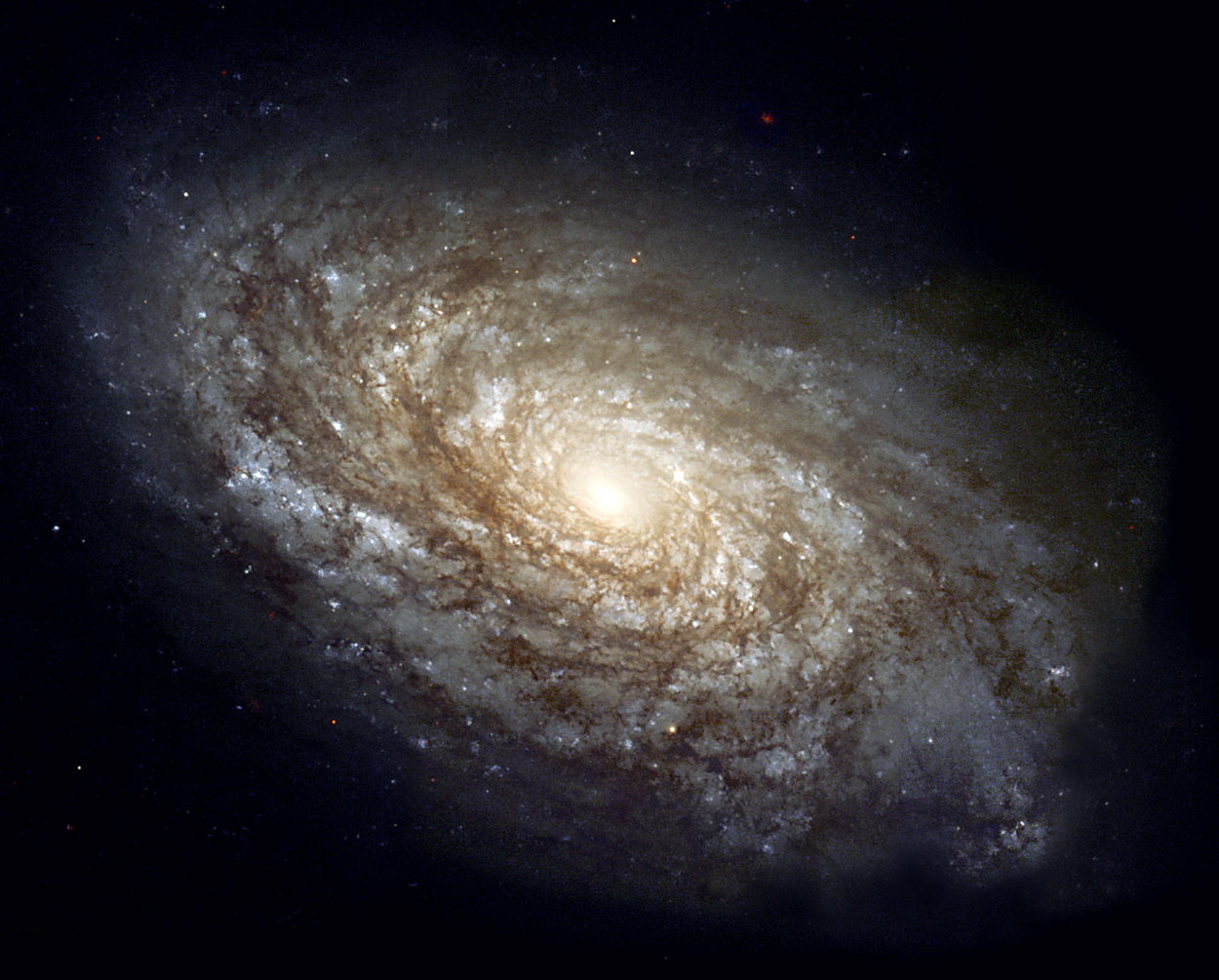
Above: Space (as viewed from Space)
For a variety of reasons, Space has become so popular of late that, for several years now, our modern era has been known as the Space Age. Why would something that is billions of years old suddenly become so important to the modern age? One must suppose that it is rooted in people's innate desire to go places, and when the first complete map of the World was unveiled (in 1961), it was not long before the realization set in among Earth's inhabitants that we'd all pretty much been everywhere. It was time for a new planet!
Unfortunately, new planets are really far away, so we had to settle for The Moon, which is not at all dissimilar to sleeping in a tent in the summertime in your parents' back yard and calling it "camping".

Above: The "Historic Williamsburg" to Space's "Magic Kingdom"
Quickly, Space became the talk of the town. The question remained, though: how do you get there, how do you breathe when you do, and does going to the Moon even count? The answer to these questions was quite simple: Whatever, as long as we do it before the Russians.
And we (by which I mean two Americans and some other guy who went to the Moon but did't get out of the lunar landing module) did!
Those two American's names were (or "are", if they're still alive) Buzz Aldrin and Neil Armstrong: The first people in Space!

Above: (from right) Buzz Aldrin, Neil Armstrong, I'm Guessing John Glenn?, and James Garner
Thanks to these brave men, the Moon had become yet another thing conquered by mankind/America (joining the esteemed company of Iraq, self-esteem/weight issues, fear of heights, Indigenous Peoples, Canada, and Dinosaurs) and this conquest was commemorated when Alan Shepard stuck an American Flag into the Moon's surface during the Apollo 14 mission.

Above: Astronaut Alan Shepard stands on a Hollywood soundstage during the filmed recreation of his own moonwalk, which, like all other lunar landings, was in no way a hoax; in point of fact, Edgar Mitchell forgot to bring the camera, and NASA couldn't afford to send John Glenn after them to drop it off.
After the success and spectacle of the Apollo lunar missions, NASA made every attempt to downplay and debunk the claims of Glenn, Mitchell, Shepard, Aldrin, and Armstrong, whose public complaints about Space ranged from "boring", "empty", "cold", "quiet/how come there's no sound?" and "not as cool as it looks/appears to be on 'Star Trek' or 'Buck Rogers'" to less damning faint praise, like "I guess sort of worth day after day after day of being cramped in a tight space in zero gravity with two other dudes, because the view of the Earth from the Moon is pretty-ish...". Worst was the notorious comment of Apollo 13's Jim Lovell, who said that the entire experience "really kinda pretty much blew...".
Shortly thereafter, NASA teamed up with a host of marketing strategists and Hollywood executives in an effort to overhaul Space's fading public appeal. The result was Science Fiction.
Inspired largely by pre-existing properties, such as Star Trek, Buck Rogers, Planet of the Apes, and The Bible, the new realm called Science Fiction made sure to eliminate the tedious prosyletizing and obvious metaphors of which these previous ventures were commonly guilty and focus, instead, primarily on Space; specifically on fantastical and often misinformed (and thus more interesting, or "cooler") concepts of Space-travel and physics.

Above: In an exciting episode of Star Trek, Spock desperately explains to Kirk that a unilateral assault on the Farsian Nebula would represent a violation of the Prime Directive and possibly provoke a retaliation by the Romulans, who are engaged in a diplomatic-relations battle with members of Starfleet over the expansion of autonomy to thwioihn oepwjnfoienhhnougbgbijjjjjjjkkkkllgrkSBJo;ibwgejknbiklwkegewG...Oops, sorry, nodded off for a second there. Anyway, meanwhile, absolutely nothing cool happens.
Science Fiction used "dramatic license" to rekindle a dwindling interest in Space. All the boring realities of Space that had become apparent thanks to NASA's exploration left a bad taste in the mouths of consumers, and so a strategic re-marketing of Space was necessary. The key question was this: "How can we make Space interesting again, when there's no sound, gravity, air, it takes forever to get anywhere, and the physics are unfamiliar and restrictive?"
The answer? Simply set stories about Space in the future, when these issues are somehow resolved ("Alien", "Aliens", "Alien 3", "Alien: Resurrection")

Above: Yeeeeeaah! Space is AWESOME!!!
Or, as an alternative solution, set stories in Space but in a different Space where these rules don't exist ("Star Wars", "Dune")

Above: Whoooooooo! SPACE!!!!
Star Wars, it should be noted, also worked hard to makeover another disappointing revelation of the so-called "Space Age", the laser, which, while it seemed cool at first, doesn't actually make a very effective hand-held weapon, doesn't make any awesome noises, and actually isn't really that cool.

Above: Bzzzzzzsshoooooowaaaahh...Crrrsshcck...crsshhukk! YEAH! Lasers!! Darth Maul! Whooooo!
As Science Fiction evolved, so too did the ideas of its creators, some of whom, like Joss Whedon, actually made concessions to Space's outrageous and lofty demands, like admitting, in his Science Fiction opus Firefly, that it probably does not and likely never will support sound, but will always support Cowboys. Or Battlestar Galactica, which admits that Space is cold and kind of sucky. In both cases, lasers are absent. Neither, however, bother to explain how propulsion works nor how the crew can just walk around like they're in a building on Earth. Presumably, somebody in "history" (what we'd call "the future") built a gravity maker. The gravity maker is never referenced.

Above: The crew of Serenity from the short-lived Science Fiction series Firefly, which FOX cancelled because they don't know how to advertise a show that is smarter than any one of its executive creative and/or marketing directors. Third from right, Nathan Fillion, who is awesome and should be on every show. Far right, Summer Glau, who is hot.

Above: A pretty thinly-veiled excuse to insert a picture of Katee Sackhoff (who plays Kara "Starbuck" Thrace in Battlestar Galactica) into my blog.
Fortunately, the rise of Science Fiction and the woeful underfunding of the Space program meant that the dissapointing revelations of the 1960s and early 70s soon faded from the public's awareness, and a new generation of would-be Space explorers and enthusiasts could dream again.
Above: "This is Houston. We are GO for launch in T-minus 27 years..."
Also, the wholesale destruction of Earth's ecosystem actually has made exploration of Space and advancements in mankind's ability to explore it urgently necessary.
So we can think of our current relationship with Space as such: We have to be at the wedding in ten minutes. But we can't remember what we did with the tuxedo, and our shoelaces are broken. And the wedding is 800 miles away. And we are infants. Better think of something fast!
It is thus difficult to accurately gauge how we should think about Space in general and to predict where our cultural infatuation with Space will ultimately lead us.
My advice? Jump on the Space bandwagon! Why? First of all, it is unlikely interest in Space will fade any time soon. It is important to remember that, like Pascal's Wager, which suggests it is safer to believe in God than to not believe in God (as the cost-benefit analysis clearly suggests), it is better to look to Space and hope we can someday find a way of overcoming the considerable obstacles it presents us with than to not look to Space and assume that we are basically all screwed.
There is also growing hope that some "people" from Space will show up and show us how to do everything*. In fact, some scientists and FBI agents believe this has secretly already happened.
*Actually, that's pretty much the only hope...

Plus, it's kinda hard to argue with something that looks like this from Earth...
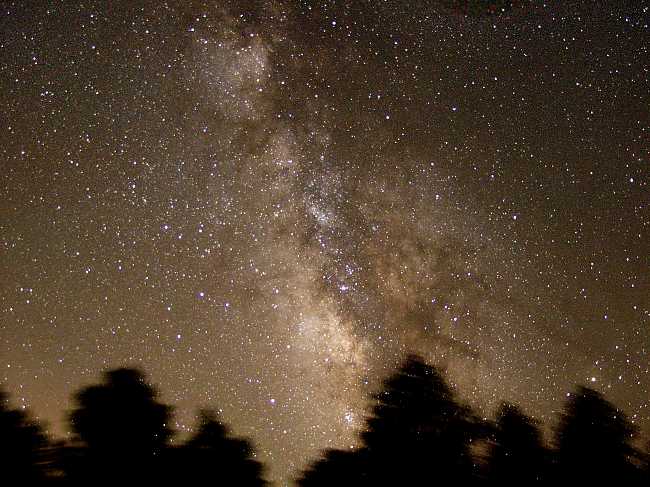
SPACE:
Pros- pretty, kinda cool, auroras, meteor showers, stars, symbolically captivating vastness convenient for metaphors/personal reflection
Cons- too big, no air, hard to get around, no sound, no nearby inhabitable planets
RATING: *** (out of 4)
BOTTOM LINE: Help us, Obi-Wan Kenobi (or anybody with technology advanced enough to get us off this planet before we run out of room/resources/air). You're our only hope...

No comments:
Post a Comment